

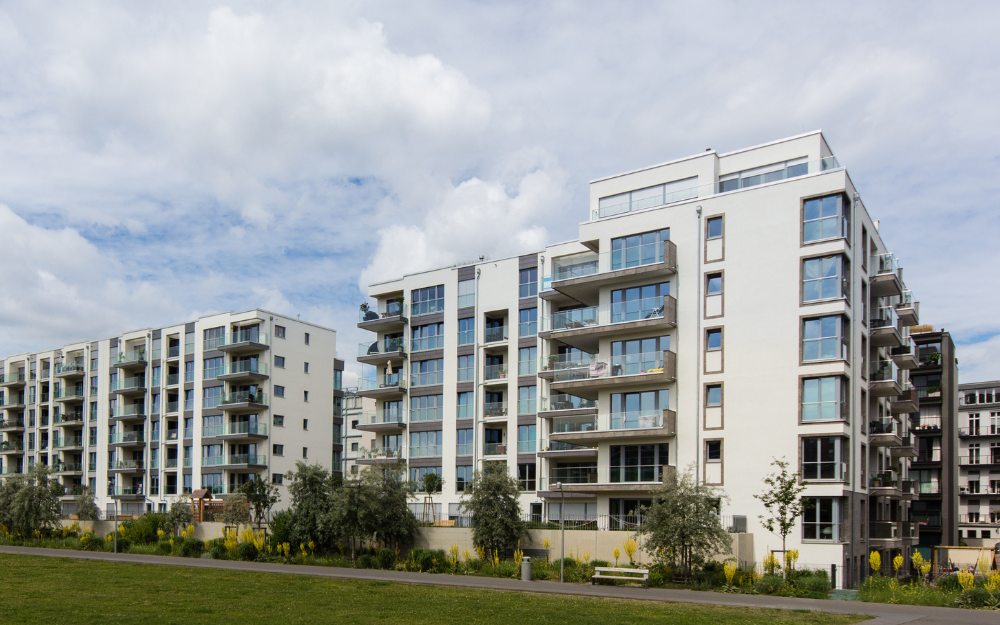
The residential market remains resilient, but after years of growth, it is entering a phase of adjustment
The Italian residential market continues to demonstrate overall resilience, but is entering a phase of gradual adjustment, shaped by macroeconomic uncertainty, rising inflation, and more onerous and selective credit conditions.
This is the key finding of the new G-Market Pulse report (Q3 2026), prepared by our Research & Data Intelligence department. The report captures a market still supported by structurally solid housing demand, but increasingly focused on the financial sustainability of home purchases.
Housing affordability is therefore becoming the central issue: demand remains strong, but the gap between the desire to buy a home and the financial ability to turn that desire into an actual transaction is widening. This trend particularly affects younger generations and, in major cities, also extends to middle-income households.
Home: the market enters a new phase
In the first half of 2026, residential property transactions continued to grow by 2.1%, but the slowdown in the second quarter signals the beginning of a phase of adjustment. Prices continued to rise, up 1.3% in the third quarter, while access to mortgage financing became more selective. Renting is playing an increasingly important role, and demand for new or recently built homes is gaining momentum again.
Housing affordability is the key issue: for younger buyers, mortgage financing remains decisive, while in major cities a “grey area” is emerging among households that do not qualify for public housing but struggle to afford prices in the open market.
The residential market enters a phase of adjustment.
Prices continue to rise, but the market slows down
In the first half of 2026, approximately 381,000 residential property transactions were completed, up 2.1% compared with the same period in 2025, following the 6.4% growth recorded over the full year. The figures point to a gradual slowdown: after rising by 4.4% in the first quarter, growth virtually stalled in the second quarter, at just +0.1%. The ten largest cities continued to post positive results (+3% over the half-year), although market trends varied significantly across locations.
On the pricing front, residential property prices rose by 1.3% quarter-on-quarter nationwide in the third quarter of 2026, and by 1.4% across the ten largest cities. In the first half of the year, prices had increased by 5.4% and 5.0%, respectively, compared with the second half of 2025.
Milan continues to be the most dynamic market, with prices 53.4% higher than in the first half of 2019, while the third quarter points to a period of consolidation.
The outlook suggests a return to more normal market conditions: price growth of approximately +0.3% in 2026, a slight decline of around -0.6% in 2027, and a return to stability in 2028. Approximately 761,000 residential property transactions are expected in 2026, down 0.8% from 2025, but still above the levels recorded in 2023-2024.
Demand remains strong, but the gap between the desire to buy and the financial ability to complete a property transaction is widening.
Mortgages: the real issue is the financial sustainability of the purchase
In this scenario, credit continues to be a key driver of the market, but also one of the main factors slowing it down.
In 2025, approximately 334,000 home purchases were financed through mortgages, accounting for 45.9% of purchases by individuals. In the first half of 2026, transaction volumes remain high, but growth in mortgage-financed transactions slows to +4.5%, with the second quarter standing at +1.3% compared with the same period in 2025.
In July 2026, the harmonised interest rate stood at 3.4% (compared with 3.2% a year earlier). Meanwhile, the 10-year eurirs rate rose from 2.69% to 3.59% over twelve months.
The increase in borrowing costs, combined with a more selective approach by lending institutions, is therefore driving a process of self-selection among prospective buyers: some abandon or postpone their purchase before even starting the mortgage application process.
The trend is particularly significant for younger generations, for whom credit is a necessary condition for accessing homeownership. In 2025, 64% of buyers aged up to 30 and 67% of those aged 31 to 40 relied on mortgage financing. In the third quarter of 2026, the average loan amount reached €147,800, up 20% compared with three years earlier, while the average loan term increased to 27 years.
New-build housing is growing again
In a market increasingly focused on the balance between price, quality and future costs, new-build properties are taking on a central role.
After twelve consecutive months of decline, transactions in new-build residential properties returned to growth in the first quarter of 2026, rising 15% year-on-year, followed by a further 16% increase in the second quarter. In the second quarter, all eight major cities analysed recorded growth compared with the same period in 2025.
New or recently built properties are valued by italians: in a hypothetical relocation scenario, 84% consider them important, and approximately one in two considers them a priority or very important. Energy efficiency, safety, lower maintenance costs and the absence of immediate work are key factors. Three-room apartments are the most sought-after property type, accounting for 34% of demand, in line with their share of available supply.
Rental market: the role of renting is growing
Renting is therefore playing an important role, not only as a flexible option, but also as an alternative to buying.
The slowdown in access to homeownership could further strengthen the role of renting, in a market already characterised by a structural shortage of supply.
In the first half of 2026, more than 510,000 new rental contracts were recorded, up 3.1% compared with the same period in 2025. This trend runs counter to the residential sales market, where growth has shown signs of slowing.
Rents, too, after rising in the first half of the year, showed signs of adjustment in the third quarter: -1.0% nationwide and -0.8% across the ten largest cities.
Milan continues to record high rental levels, with rents 55.9% higher than in 2019.
Renting is increasingly an alternative to buying.
The role of investors and the challenge of affordable housing
The issue of affordability raises a broader question about the quantity and diversification of residential supply. Rebalancing supply and demand will require greater involvement from corporate investors in the residential sector.
Interest has grown in recent years, but remains concentrated mainly on built-to-sell developments and student housing. Developing a structured supply of built-to-rent properties, including affordable housing, is instead one of the main levers for expanding a rental sector that remains insufficient to meet the diversity of housing needs.
The “grey area” of housing: the new affordability challenge
The issue of housing affordability affects not only lower-income groups, but also those identified as the “grey area”: households with incomes too high to qualify for public housing benefits, but insufficient to afford rents at the lower end of the private rental market.
The phenomenon is particularly pronounced in major cities: even in the most peripheral OMI areas, potential housing hardship affects approximately three out of four households in Milan, two out of three in Rome, and 62% in Naples.
In Milan, across all peripheral OMI areas, the share of households above the potential housing hardship threshold exceeds 60%, while in central and semi-central areas it consistently exceeds 75%. The pressure extends beyond the city itself: it now affects the entire inner belt and much of the outer belt.
Download the residential market report
Discover the data for the third quarter of 2026 and explore the analysis in detail, covering:
- trends in residential property transactions and prices across italy and the ten largest cities, with forecasts for 2026-2028
- the credit market: interest rates, eurirs and euribor, average mortgage amount and average mortgage term
- a comparison of new-build and existing property prices, and demand by property type
- rental market growth and rent trends
- the “grey area” by omi zone in milan, rome and naples
Download the report for a comprehensive overview of the new phase of the italian real estate cycle.